

It Might Start With Your Feet
 by
by 
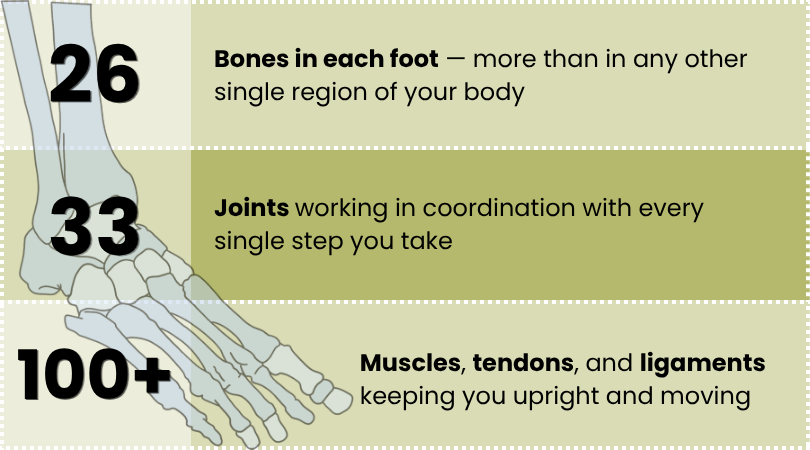 You came in for your knee. Or maybe it was your hip, your lower back, or a nagging pain in your shoulder. So why is your physical therapist asking you to do calf raises and toe-spreading exercises? The answer might surprise you: the problem can sometimes start far below where it hurts.
Think of your body as a skyscraper. No matter how beautiful the upper floors are, if the foundation is uneven, cracked, or unstable — every floor above it will eventually show the strain. Your feet and ankles are that foundation. They are the only part of your body that contacts the ground, and every force, wobble, and compensation that happens down there travels upward through your kinetic chain.
This isn’t just a metaphor. It’s biomechanics. And understanding it can completely change how you think about your pain — and your recovery.
How Your Feet Influence the Whole Body The Kinetic Chain — A Force Traveling Upward
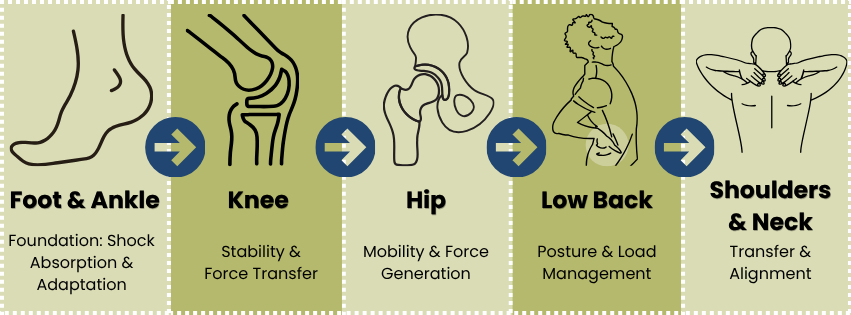 When your foot strikes the ground, a cascade of forces travels up through your body in a fraction of a second. If your foot excessively pronates (rolls inward) or lacks control, it can increase inward rotation of the shin, alter how the kneecap tracks, and influence hip and pelvic mechanics — all within milliseconds of ground contact. Do this thousands of times a day, and you begin to understand why “my knee hurts” sometimes has everything to do with your foot.
This is called the kinetic chain, and it’s one of the most important concepts in physical therapy. Pain is rarely isolated to the place it lives. It’s often the end result of a story that started somewhere else entirely.
Common Presentations
The Injuries We See — and the Foot ConnectionHere are some of the most common conditions we treat in the clinic — and why, in every single one, we take a careful look at the feet and ankles, even when they feel perfectly fine.
Plantar Fasciitis
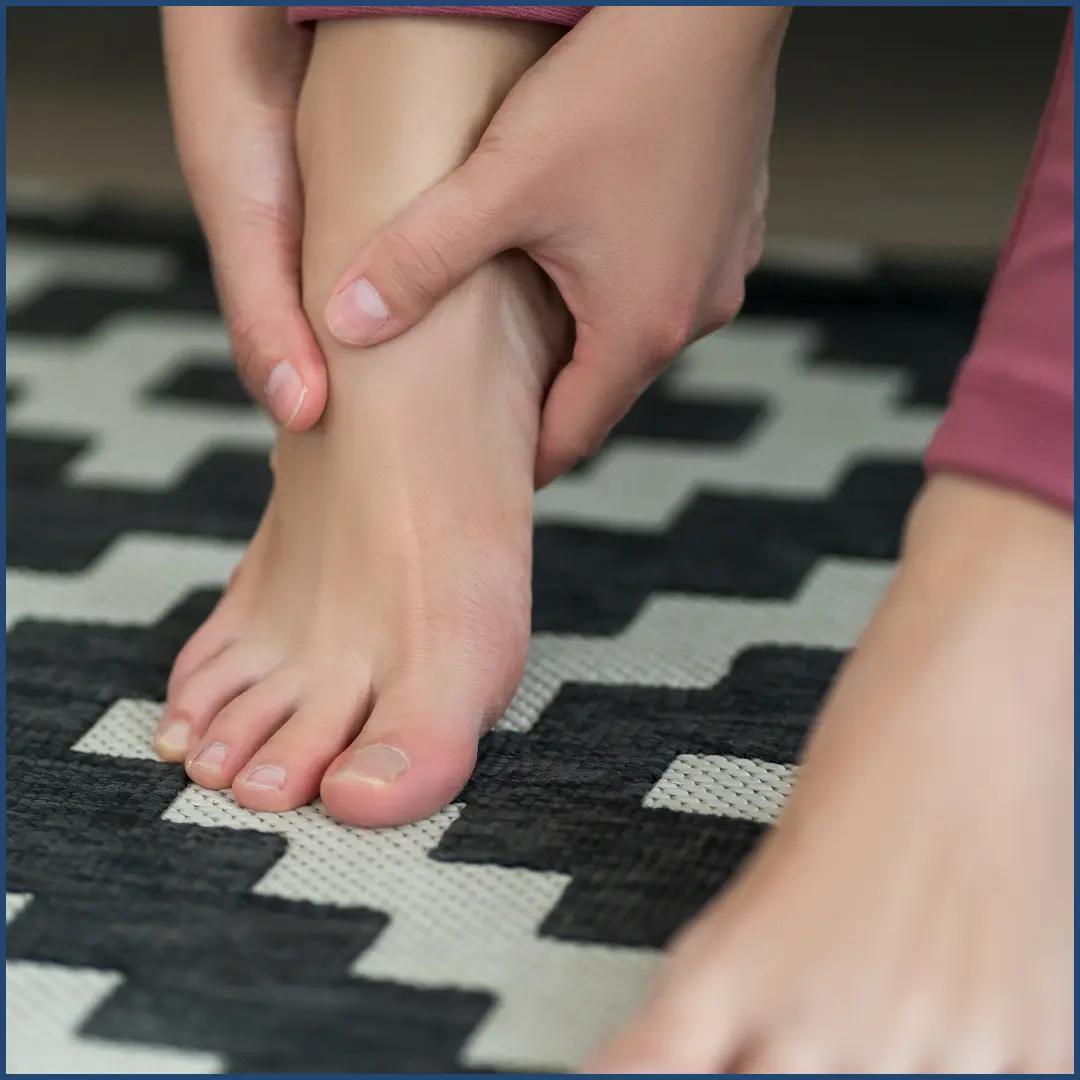
That stabbing heel pain when you first step out of bed? The plantar fascia — the thick band of tissue running along your arch — becomes inflamed when it’s under too much tension. Tight calves, poor arch support, and limited ankle mobility all feed directly into this.
Achilles Tendinopathy
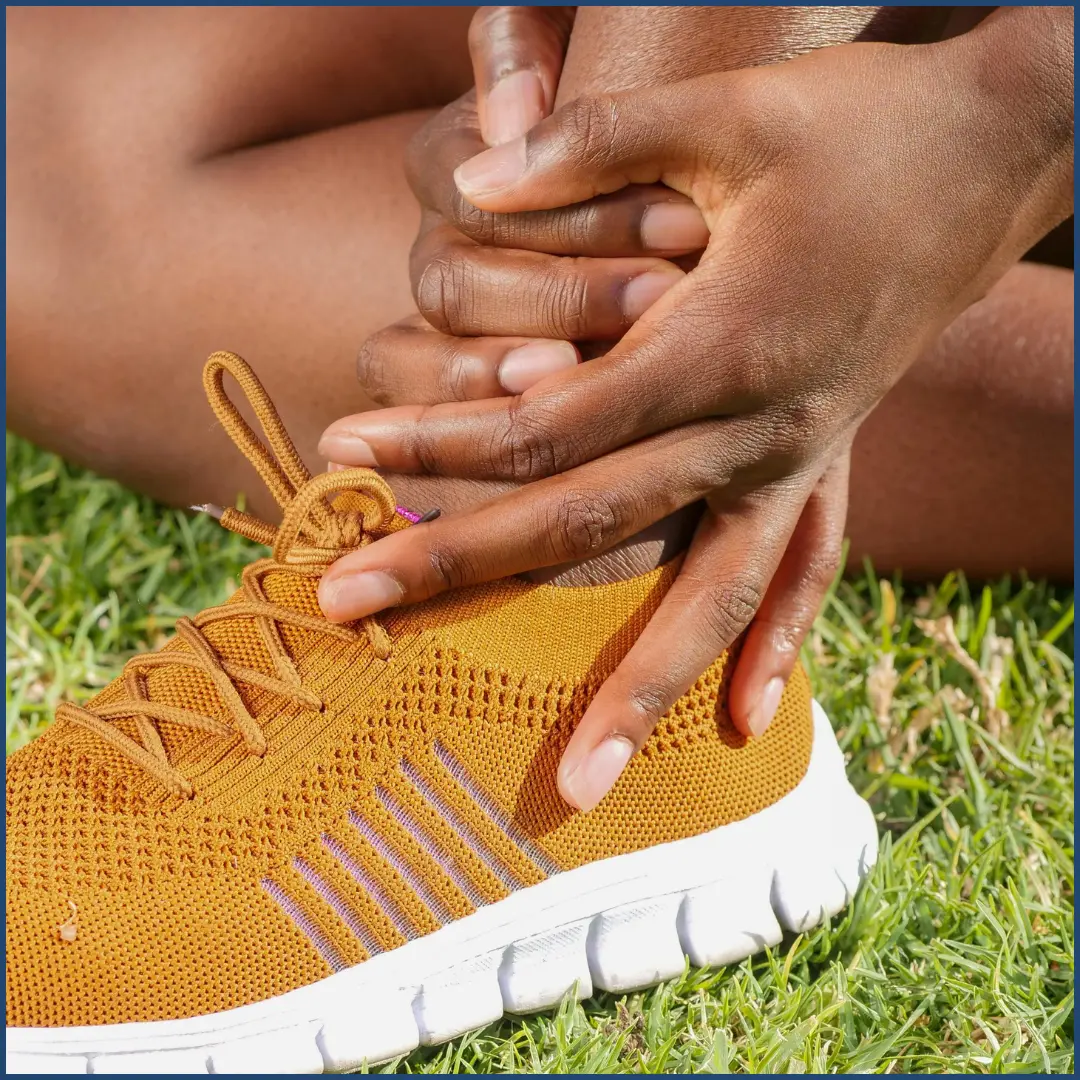
The Achilles connects your calf muscles to your heel bone, and it can experience loads several times body weight during running. When the foot and ankle lack proper mobility or strength, this tendon bears more load than it should, leading to pain, stiffness, and thickening over time.
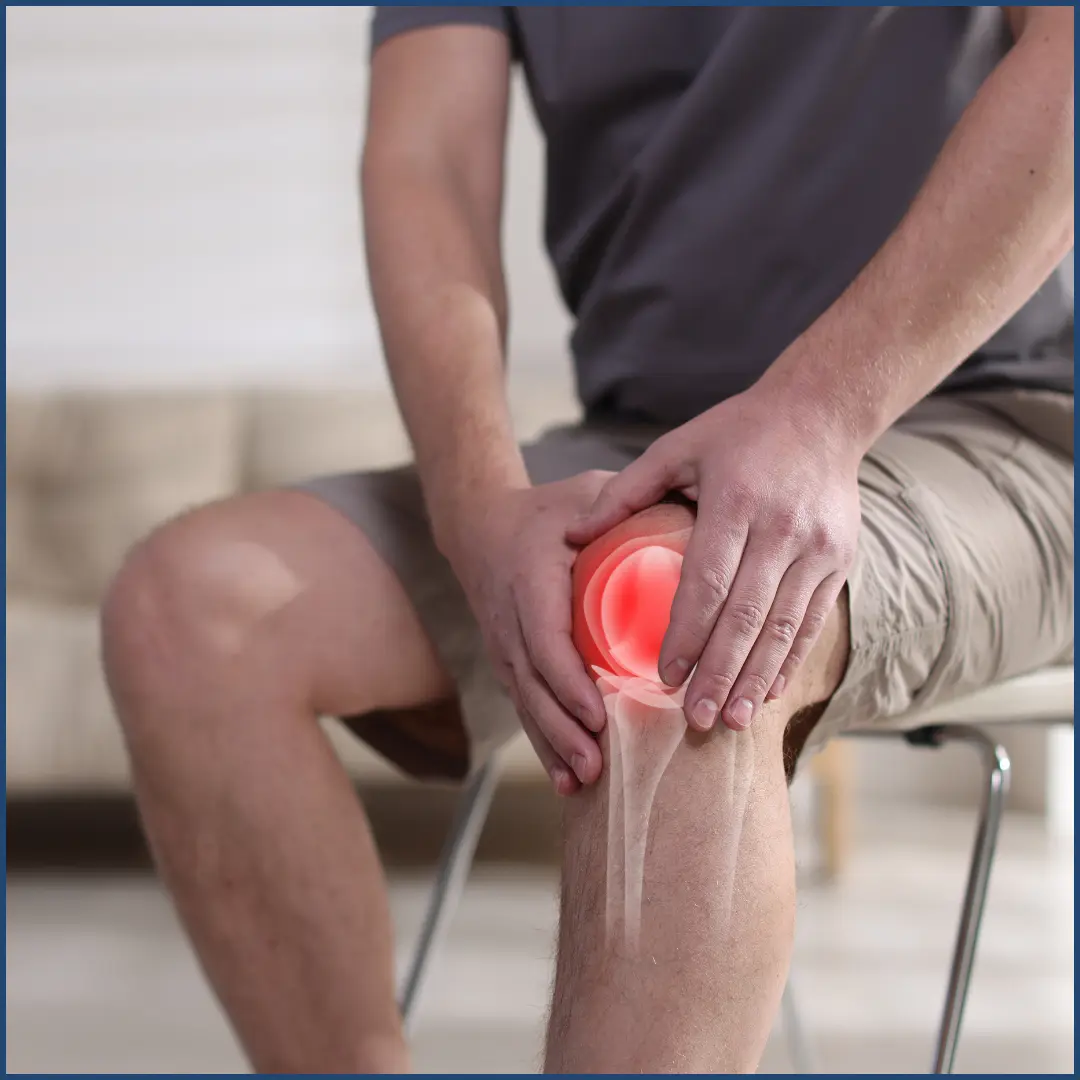
Patellofemoral Syndrome
“Runner’s knee” — pain around the kneecap — is frequently traced back to overpronation at the foot. When the arch collapses, the lower leg rotates inward, pulling the kneecap out of its groove. Strengthening the foot and correcting alignment can dramatically reduce knee symptoms without ever touching the knee directly.
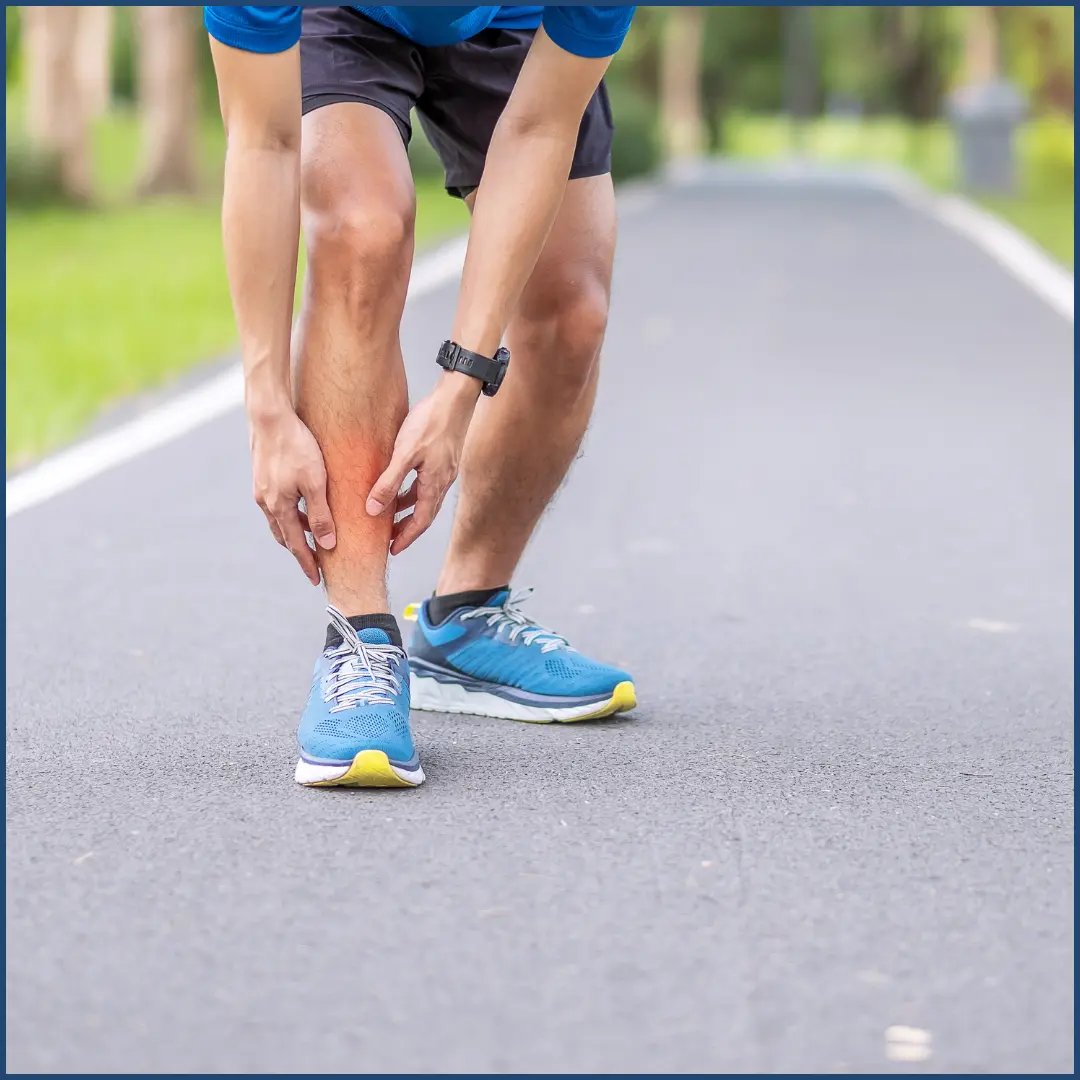
Shin Splints (MTSS)
Medial tibial stress syndrome often stems from how the foot loads during impact. Flat feet or excessive pronation increase the rotational stress on the tibia. Addressing foot mechanics and calf strength is central to treating — and preventing — this painful condition.

IT Band Syndrome
That sharp pain on the outside of your knee when running? Overpronation at the foot can contribute to hip adduction (the pelvis dropping), which increases tension throughout the IT band. Foot mechanics and hip stability go hand-in-hand in this one.

Low Back Pain
Asymmetrical foot mechanics — like one foot that pronates more than the other — create a functional leg-length difference. Over time, this tilts the pelvis and loads the lumbar spine unevenly. Many patients with chronic low back pain have underlying foot issues that no one has ever addressed.

Ankle Sprains
A rolled ankle isn’t just about the ligaments you stretched. Sprains cause lasting changes to your proprioception — your body’s ability to sense its position in space. Without proper rehab, this “position sense” stays impaired, dramatically increasing your risk of re-injury. One sprain often leads to chronic instability.

Hip & Glute Dysfunction
Weak foot intrinsic muscles change how the entire leg loads. When the foot can’t control the arch, the hip compensators — glutes, tensor fasciae latae (TFL), piriformis — work overtime. This is why hip strengthening and foot stability exercises are almost always prescribed together.
Why This Matters For You
When Your PT Gives You Foot ExercisesThis is one of the most common moments of confusion in the clinic: a patient comes in for knee pain, and we hand them a sheet of exercises that includes toe yoga, single-leg balance work, and short foot exercises. “But my knee hurts, not my foot.”
Here’s the thing — we’re not ignoring your knee. We’re addressing why your knee is hurting. If your foot is the origin point of the dysfunction, that’s where the fix begins. Treating the knee without addressing the foot is like mopping the floor while the faucet is still running.
Why We Prescribe These Foot Exercises
 Short Foot Exercise
Activates the intrinsic foot muscles to build a dynamic arch — not a rigid, braced arch, but one that can actively respond to load and movement.
Calf Raises (Eccentric)
Strengthens the Achilles complex and teaches the ankle to absorb force properly, reducing stress on the knee, hip, and plantar fascia.
Single-Leg Balance
Retrains proprioception — the joint’s position-sense — which is impaired after any ankle sprain or lower extremity injury.
Toe Spreading / Toe Curls
Wakes up the tiny intrinsic muscles of the foot that have been “asleep” in stiff shoes for years. These muscles are essential for balance and arch control.
Ankle Mobilizations & Dorsiflexion Work
Ankle mobility directly affects how your knee tracks during a squat, lunge, or stair. Limited dorsiflexion forces the knee inward — a direct injury setup.
Heel-to-Toe Walking
Reestablishes proper gait mechanics and ensures load is distributed across the full foot — not just the heel or ball — with every step.
Building From the Ground Up
What a Strong Foundation Looks LikeA healthy foot and ankle isn’t just about being pain-free. It’s about having a foot that can do three things brilliantly: absorb shock, adapt to uneven surfaces, and transfer force efficiently up the chain. When all three are working, the rest of your body gets to do its job without compensating.
Think about walking barefoot on sand versus on hard pavement in rigid shoes. On sand, your foot lights up — all those small muscles working, your toes spreading, your arch rising and falling with each step. Your whole body is engaged. Supportive footwear can reduce how much some intrinsic foot muscles are challenged compared with barefoot activity.
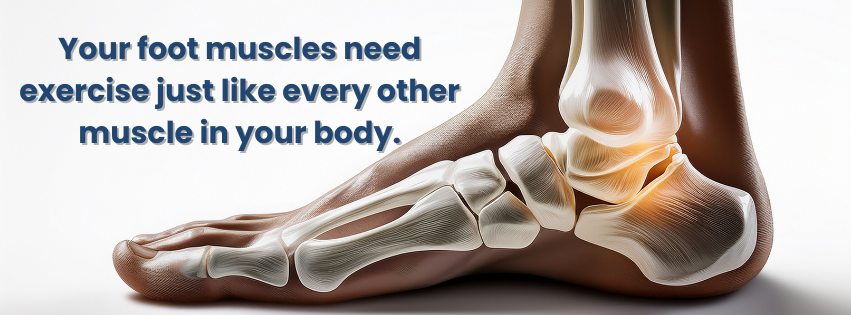
We’re not saying throw out your shoes. We’re saying: your foot muscles need exercise just like every other muscle in your body, and for most of us, they’ve been underworked for decades.
Whole-body awareness starts at the ground. When you improve how your foot contacts the earth — how your arch loads, how your toes stabilize, how your ankle moves through its range — you create a ripple effect up through every joint above. Patients who address their foot mechanics often find that their chronic knee pain, hip tightness, or even lower back discomfort improves significantly, even when the foot never “hurt” to begin with.
The goal isn’t just getting you out of pain. It’s rebuilding your body from the ground up, so the same problem doesn’t come back six months from now.
Your Takeaway
Three Things to Remember1. Pain where you feel it isn’t always pain where it starts. Your body is one connected system. A tight calf, a collapsed arch, or a stiff ankle can be the origin story for pain that’s living somewhere entirely different. Your PT is trained to follow that chain upstream.
2. The exercises that seem unrelated are often the most important ones. When we ask you to work on your foot, we’re working on you — on your alignment, your stability, your kinetics. Every exercise has a reason, even when the connection isn’t obvious. Ask your PT to explain it. We love when patients want to understand.
3. Prevention starts at the foundation. If you’ve ever dealt with recurrent ankle sprains, persistent knee aches, or mysterious low back pain, it’s worth having someone evaluate your foot and ankle mechanics. The solution to your “mystery pain” might be closer to the ground than you think.
Ready to Build a Stronger Foundation?
Our physical therapists take a whole-body approach to every evaluation — starting with where you stand. Whether you’re dealing with foot pain, a nagging knee, or an injury that keeps coming back, we’d love to help you find the root cause.Schedule an Appointment Today!
Because every body moves differently, the best results start with a personalized evaluation at The Therapy Network.